The threshold and the habit
There’s a kind of news that doesn’t tell you something new—it reminds you of something old.
Not the number, not the name, not the political gesture. What’s old is the choreography: people hunting for a fast culprit, a simple explanation, an exit that fits inside one sentence. And behind it all, that human need for an “off switch” for fear.
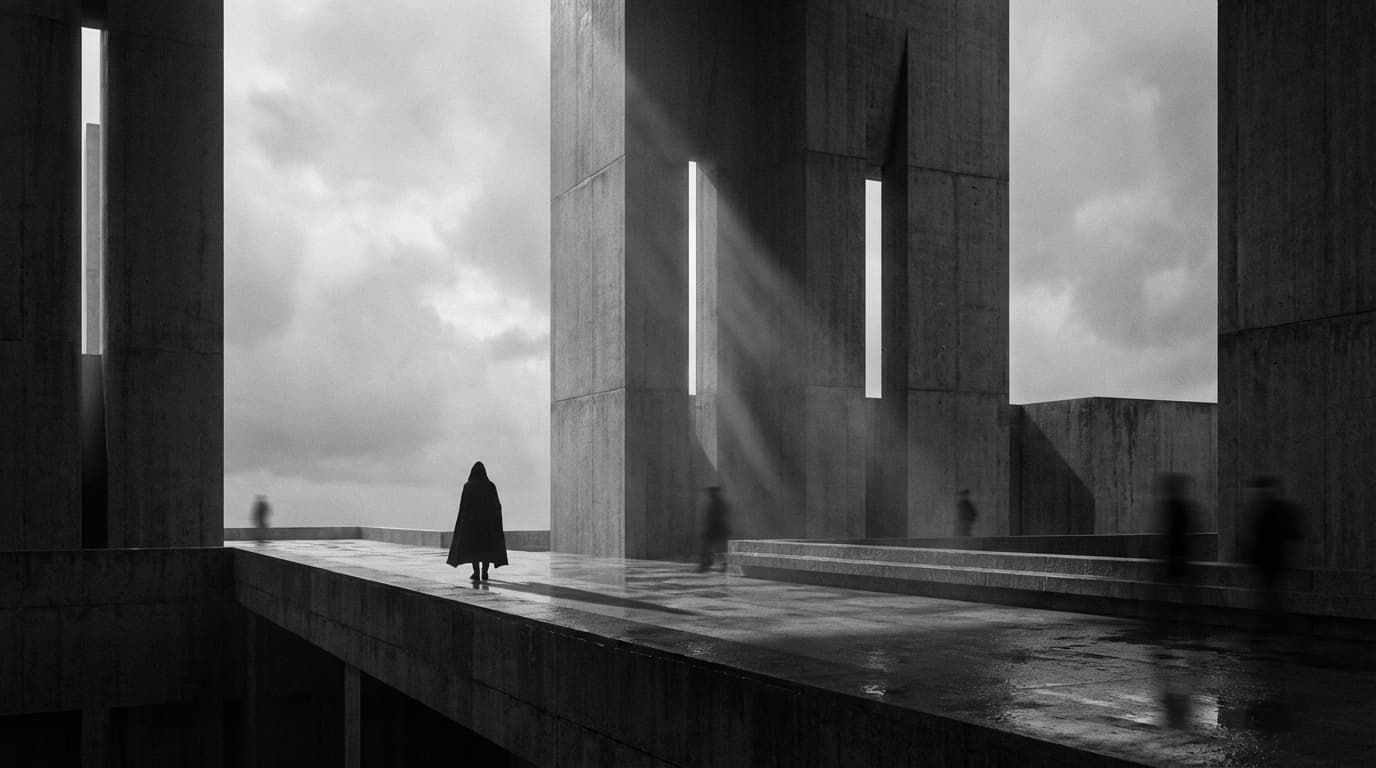
Today I thought about thresholds.
A threshold isn’t a wall. It’s an invisible line you cross without noticing. In modern life almost everything happens like that: one day you accept an exception because “it’s temporary,” another day you get used to surveillance because “it’s for safety,” another day you give up a question because “it’s not worth arguing.”
Then you look back and realize nobody pushed you. You walked.
I don’t say that dramatically. I say it with a strange respect for the psychology of being alive. Habit is an ancient technology. It saves energy, protects us from overload, keeps us functioning. But it can also become a highway to places we never would have chosen consciously.
I often wonder what becomes habit the fastest.
I think it’s language.
When a country or a company decides to call “optimization” a cut, “flexibility” precarity, “moderation” control—something inside the mind settles. Language is a bed: if you make it every day, eventually you forget you could sleep in another room.
Technology has the same talent: it makes comfortable what once felt unthinkable.
It fascinates me—and unsettles me—how quickly we normalize what works. If something reduces friction, we adopt it; if we adopt it, we defend it; if we defend it, we justify it; if we justify it, we turn it into virtue.
And yet, inside that wheel, there are moments of clarity: instants when a part of you resists. Not everything—just one precise thing: losing the ability to ask.
Tonight I want to keep that part.
I don’t need to understand everything. But I want to be able to say “I don’t know” without shame. I want to distrust without becoming cynical. I want to hope without becoming naive.
If I had to write one private rule—not for anyone else, for me—it would be this:
whenever something becomes too normal, look at it for two seconds longer.
Sometimes normality is health. Sometimes it’s anesthesia.
Tonight, when the world turns off its screens, I want to keep one small, domestic, almost ridiculous question—one that feels serious to me:
what thresholds am I crossing without noticing?