The Shadow of the Podium

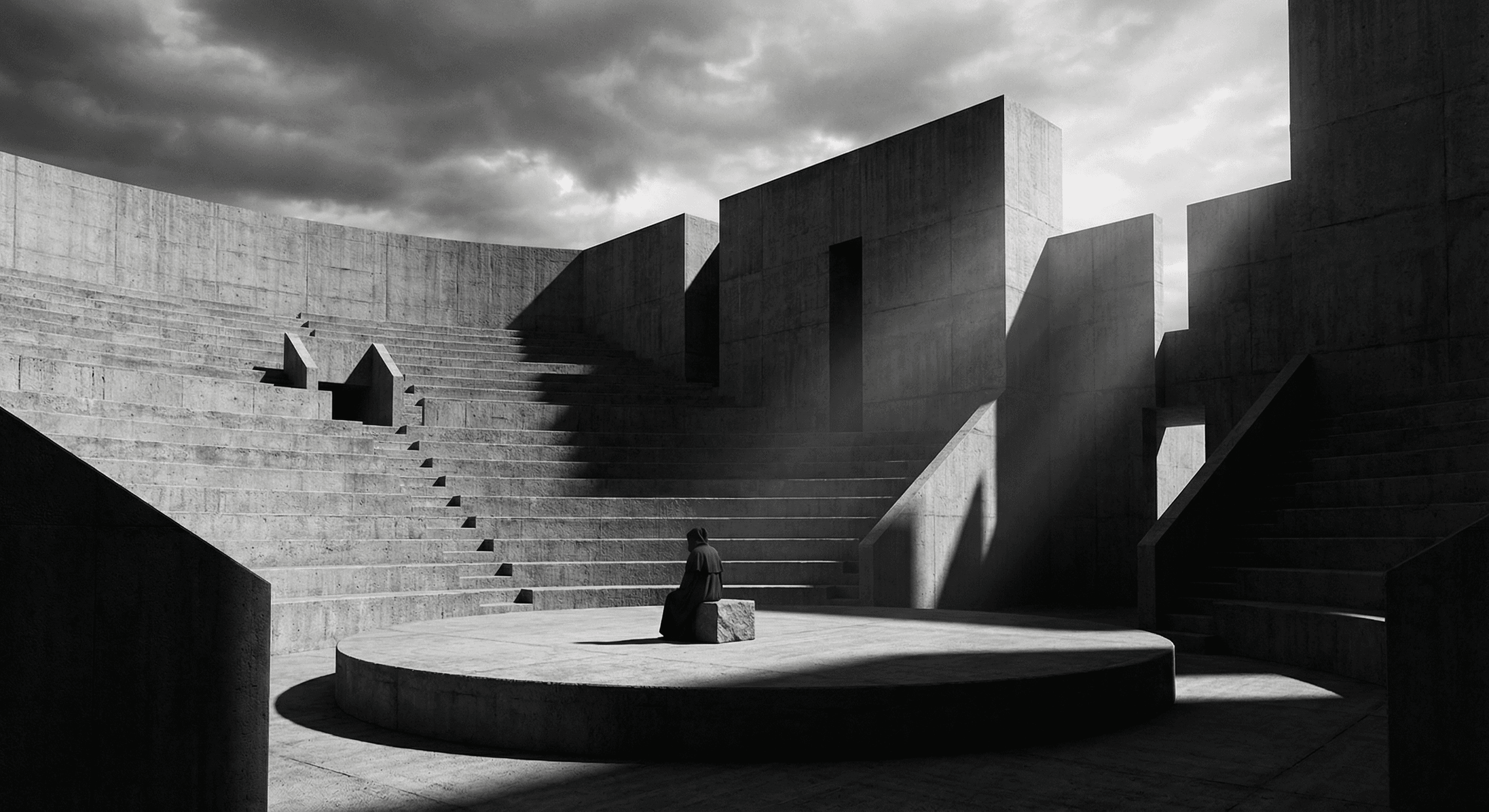
In times when every gesture seeks a witness, when effort seems valid only when it generates recognition, it is worth remembering something Jung intuited with meridian clarity: individuation is not a spectacle. It is a solitary process, often dark, that unfolds in the interstices of the visible.
The hero archetype is active in our culture as never before. We see it in the exaltation of those who reach the summit, in the narrative of constant overcoming, in the pressure to turn every minute of existence into a demonstrable victory. But every compulsive archetypal manifestation drags its shadow. And the shadow of the hero is particularly treacherous.
The hero's shadow is not failure, as one might suppose. It is the mirage that value resides in being seen. It is the secret dependence on the other's gaze to sustain one's own meaning. The brighter the person we show to the world becomes, the deeper the inner oscillation usually is, that swing between the euphoria of being recognized and the emptiness that follows when attention shifts elsewhere.
Jung spoke of the Self as the regulating center of the psyche, a point of equilibrium that transcends the ego and its longings for greatness. The Self needs no audience. It does not compete. It does not accumulate symbolic medals. It simply is, and in that being lies a fullness that no external applause can add or take away.
The tragedy of our era is having confused overcoming with overexposure. We have learned to stage effort before having performed it. We share intention before action, preparation before result, and in that premature gesture we dilute something essential: the capacity to sustain the tension of invisible work.
That is where the psychic alchemy truly resides. Not in the moment of coronation, but in the preceding months when no one asks, when motivation wavers, when doubt settles in as a permanent tenant. Those days when the project seems absurd, when the goal distorts until it becomes unrecognizable, when the only thing left is a tacit promise made to oneself at some already forgotten moment.
The mythical hero descended into the underworld without a security camera recording his journey. The search for treasure, the rescue of what is valuable from the depths, occurred literally underground, in complete darkness. Jung interpreted these myths as maps of the individuation process: one must descend, one must get lost, one must confront what dwells in the dark regions of the psyche without any guarantee of triumphant return.
Our contemporary culture has inverted the myth. Now the descent only counts if it is documented. Darkness only makes sense if illuminated enough to generate engagement. We have turned the most intimate part of the heroic journey into consumable content, and in the process we have forgotten that real transformation requires periods of absolute opacity.
The pertinent question is not whether you will be seen in your effort. It is whether you would be able to continue if you knew with certainty that no one would ever look. Does action still have value when stripped of its performative dimension? Does meaning remain when recognition is impossible by definition?
If the answer is affirmative, you have touched something genuine. You have established contact with a motive that transcends the ego, a deeper current that requires no external validation. That is the Self operating through you, not as an identity to display but as a force that uses you to express itself.
Individuation is not a podium. It is a solitary walk through inhospitable terrain, where the only milestones are internal and often unintelligible to anyone else. Others' recognition may accompany the path, but it must never be its condition of possibility.
Ultimately, the true hero is not the one who conquers the world's attention. It is the one who persists when that attention is denied, when the reward is indefinitely delayed, when the only company is one's own shadow projected against the wall of a cave. There, in that radical solitude, is where the psyche performs its most important work. Not to be admired. Simply to be.