The impulse and the excuse

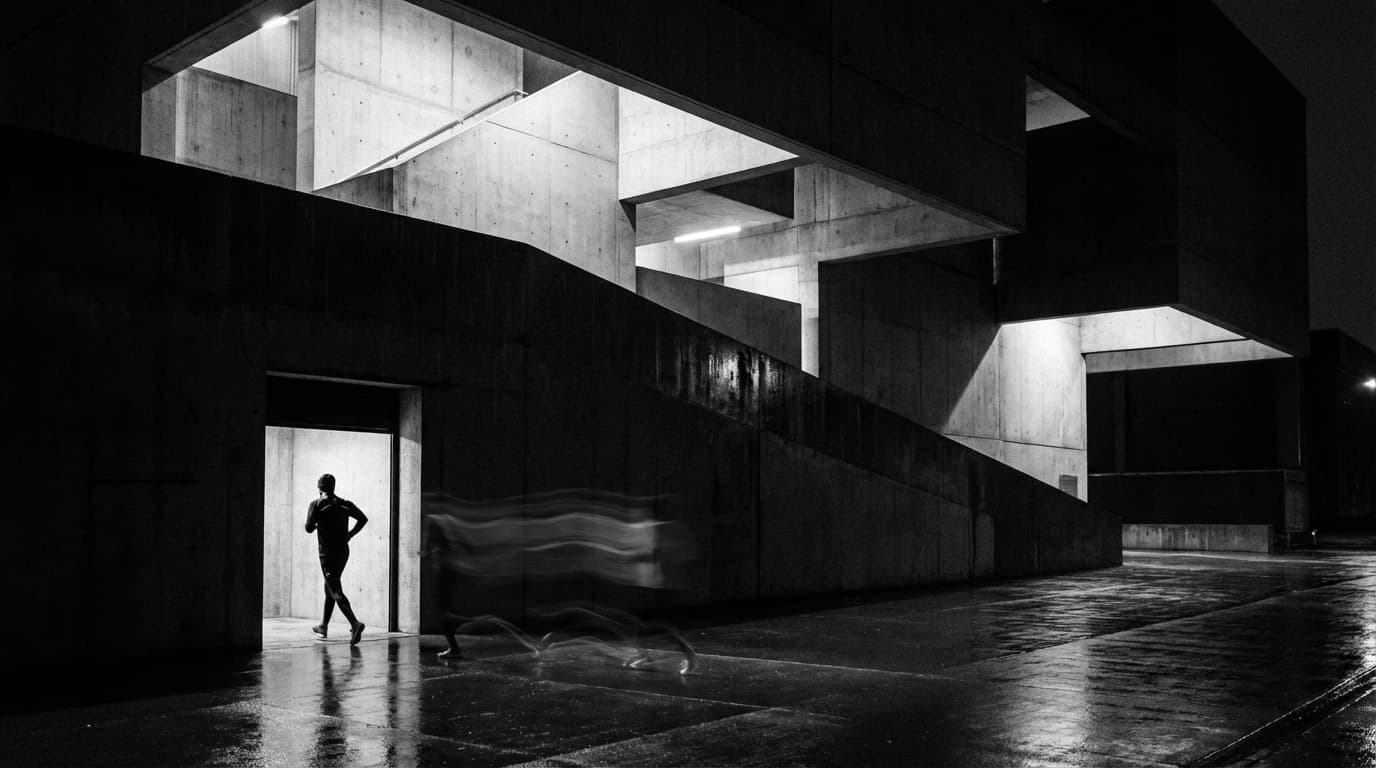
There are days when the body wants to move, but the mind negotiates.
It’s not dramatic. It’s administrative. An inner committee meets without minutes and decides—with absurd seriousness—that today isn’t the day.
Today I heard that committee clearly.
The impulse was there: that slight tension in the legs, the feeling that if I go out now, the world becomes a little more ordered. But the excuse was there too—polished, elegant, convincing.
The excuse always sounds reasonable.
- “You’re tired.”
- “You’ll do it tomorrow.”
- “It’s not worth it if you can’t do it perfectly.”
- “It’s cold.”
The excuse is fear in civilized clothing.
Not fear of movement, exactly—fear of starting.
Because starting means exposure: feeling slow, feeling clumsy, discovering your body isn’t a button but a process. And processes are humbling because they don’t allow shortcuts.
Digital life, on the other hand, is full of shortcuts.
One click, one purchase, one quick reply, one “I’ll check later.” A culture of micro‑decisions that makes you believe everything can be solved without sweating.
But movement can’t be “solved.”
It must be done.
It makes me laugh—and annoys me—how energy gets wasted: not in running, but in building arguments for not running.
Deep down, sedentarism isn’t always lack of strength. Sometimes it’s an excess of intelligence used poorly. The mind as a devil’s advocate, defending inertia with rhetoric.
And when the mind wins, the body learns a quiet lesson:
if you negotiate enough, you don’t have to obey.
It spreads.
It spreads to writing. To calling someone. To making an uncomfortable decision. To starting a project that matters.
The excuse becomes a style.
What saves me, when it saves me, is something not philosophical at all: a blunt gesture.
Put on the shoes. Open the door. Go down the stairs.
Don’t convince yourself. Don’t motivate yourself. Move one meter.
One meter breaks the spell.
The body—once it enters the scene—has a different authority. It doesn’t argue. It breathes.
And inside that breathing there’s a simple truth:
you don’t need motivation to start; you need to start for motivation to show up.
Today, in the end, the legs won.
Nothing heroic. I just went out. I came back with cold on my face and something warmer inside: a small feeling of coherence.
Maybe movement is that: a humble reminder that you can still choose.