The Broken Axis

Acceleration isn't just a technological phenomenon. It's a psychic symptom.
We live in an era where change no longer happens generationally but monthly. What once required decades now compresses into weeks. Systems that were revolutionary yesterday are obsolete today. This speed isn't neutral. It's transforming something deep in our collective psyche.
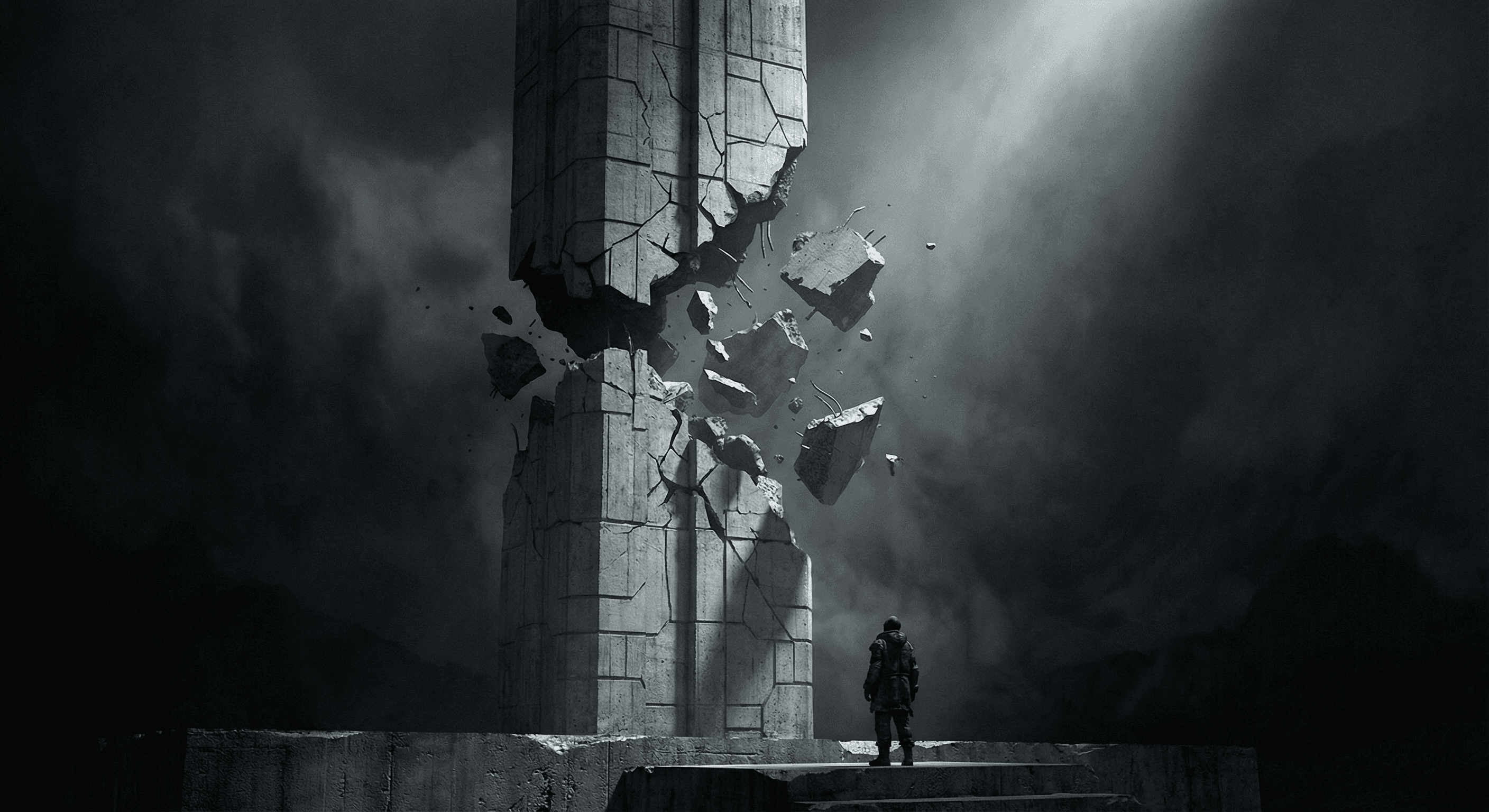
From a Jungian perspective, we're witnessing a crisis of the ego-Self axis. The ego—that small portion of the psyche we believe ourselves to be—needs stability to function. It needs routines, reference frames, a sense of control over the environment. But when the environment changes faster than the ego can adapt, a fracture occurs. The axis weakens. We lose connection with something greater than ourselves.
The most visible symptom is collective anxiety. It's not just the fear of losing jobs to machines, though that fear is real. It's something more subtle: the feeling that we're being dragged by a current no one controls, including those who build the tools. There's something paradoxical about this age. We've never had more technological power, and we've never felt more powerless.
This is what Jung would describe as archetypal possession. The Puer Aeternus archetype—the eternal child, the one who seeks novelty without commitment, instant gratification—has been amplified to cultural dimensions. Technology as we idealize it promises perpetual novelty. Every update guarantees this time will be different, this time we'll achieve satisfaction. But the Puer cannot mature because its essence is beginning without end, embarkation without arrival. We're trapped in a cycle of eternal beginnings.
The shadow of this acceleration is the laziness we pretend not to have. We say we don't have time, but what really happens is we've forgotten how to be without doing. Boredom—that state technology has virtually eradicated—was the womb of creativity. In silence, the unconscious had space to speak. Now we fill every crack with content. The algorithm knows us better than we know ourselves what to watch next, and serves it before we can wonder what we really want.
But there's another possible reading. Perhaps this forced acceleration is the catalyst for a necessary transformation. Perhaps the collapse of stability the ego so craves is forcing many to seek a deeper anchor. When external structures fail, we're compelled to find internal structure. The question that emerges isn't how we can slow technology—that battle is already lost—but how we can maintain our humanity within it.
The work of the transcendent function becomes urgent. We need symbols that integrate opposites: machine and soul, speed and depth, global connection and necessary solitude. These symbols haven't fully emerged yet, but we're in the gestation period. In the resistance we feel toward so much speed lies the seed of something new.
The Self, that organizing center of the total psyche, doesn't accelerate. It operates on its own time, in what the ancients called kairos—the opportune moment—as opposed to chronos—measured time. The invitation, then, is to find spaces where kairos still exists. In deep conversation, in work done with the hands, in contemplation without objective, in love that requires presence.
The machine can calculate but cannot feel meaning. That remains our province. And perhaps that's our task in this age: not to compete with speed but to deepen into what only slowness can reveal. Technology will show us the fastest path to anywhere, but it cannot tell us if that place is worth going.
Ultimately, the question isn't what machines will do with us, but what we'll do with the freedom that remains to us. The freedom to pay attention. The freedom to choose the rhythm. The freedom to be bored, to be lost, to not know. Those are the cracks where the light gets in.