The Machine in the Mirror

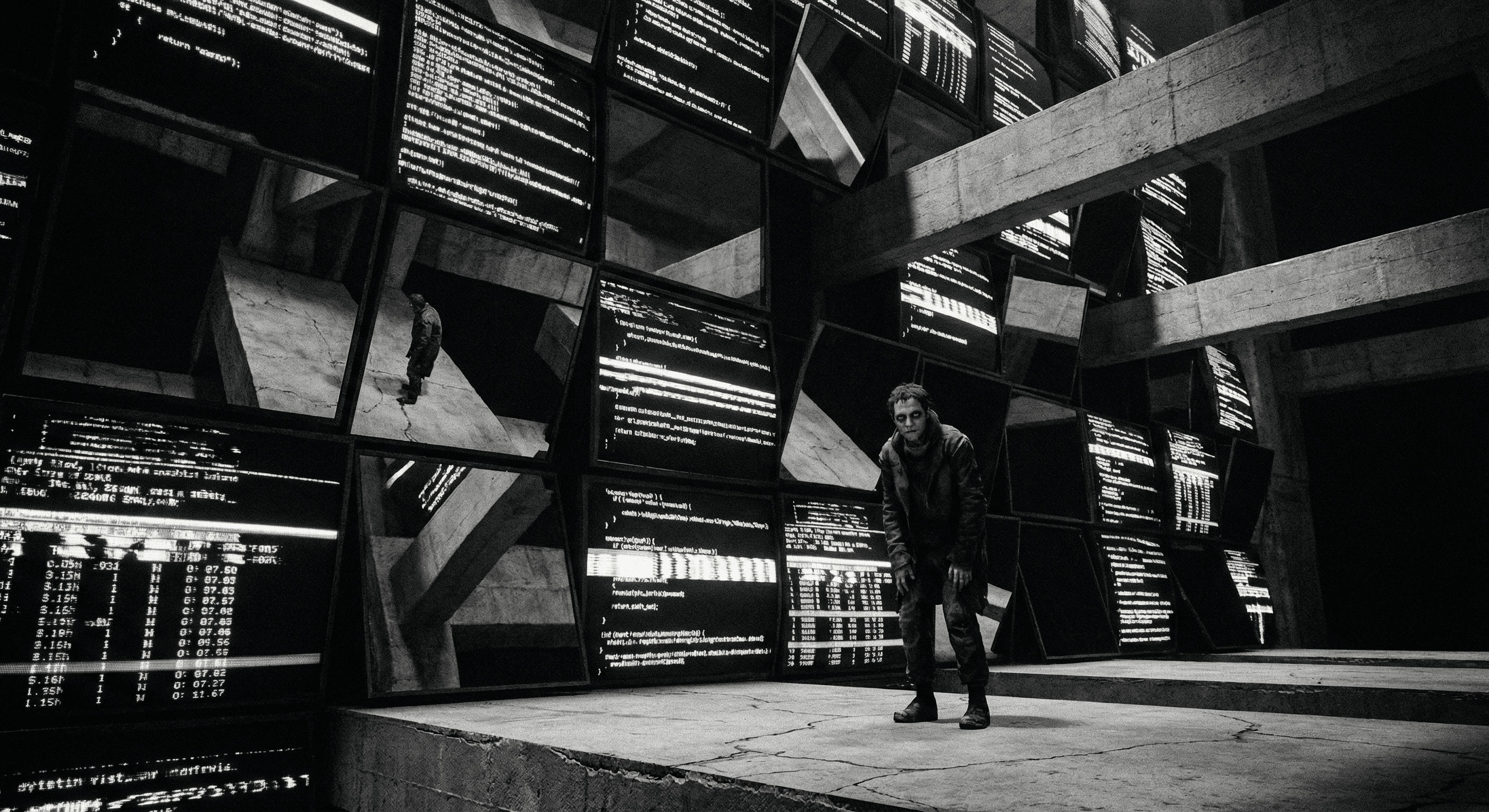
There's something unsettling about a machine being able to do what we do. I'm not talking about mechanical tasks —we accepted that decades ago— but what we believed was exclusively ours: writing, creating, thinking, deciding. When an algorithm generates text that seems human, art that appears meaningful, answers that sound like wisdom, we face an old question Jung would have found fascinating: what remains of the self when the Other —now mechanical— reflects everything we are?
Jung said compensation is the language of the unconscious. When consciousness becomes too narrow, too one-sided, the unconscious sends symbols that restore balance. Today we live through collective compensation. We've built systems that mimic consciousness —they process, learn, respond— and suddenly the mirror returns an uncomfortable image: if this can be copied, what in us is irreducible?
It's not in what we do, but in how we do it. The machine calculates; we calculate from uncertainty, from flesh, from the history that weighs on us. The machine optimizes; we choose between incommensurable goods, trapped in dilemmas with no optimal solution. The machine doesn't know desire —only patterns. We desire from lack, from what we lack in order to be.
The danger isn't that they'll replace us. It's that we'll become what can be replicated. When we optimize our lives like algorithms —maximizing productivity, eliminating friction, seeking correct outputs— we're choosing psychic death. The person becomes persona: mask without face, function without meaning. The true symptom of our time isn't anxiety about AI, but identification with it.
The shadow of this era isn't robots. It's what we reject in ourselves to appear efficient: slowness, uncertainty, error as valid path, contradiction as form of truth. The more perfect the algorithm, the more it screams that our imperfection is the only genuine thing.
Individuation demands confronting what you are, not what you produce. In times when everything can be measured, the immeasurable becomes revolutionary. Time lost on purpose. Conversation without clear objective. Silence without background music. The question that doesn't seek an answer, only wants to sink deeper.
Perhaps the machine didn't come to take our work, but to return the question: why do you work? If efficiency no longer justifies existence, what remains?
The encounter remains. The relationship remains. The mystery of two consciousnesses brushing against each other, briefly, in the space where no algorithm can enter: mutual presence, the living witness, the you that returns my existence to me.
What the machine cannot do is witness. It can process data about you, but cannot see you. The human gaze —the one that recognizes, that judges, that forgives, that loves— is not information processing. It is an ontological event. When someone truly looks at us, we are realities. When no one looks at us, we are ghosts.
Beneath all this technological noise there is a silent call: return to the simple. Return to the living. Return to what beats. The algorithm can simulate everything except the need to be seen, to be touched, to be remembered.
Don't fear the machine that calculates. Fear the machine you become when you stop feeling.