The waiting room

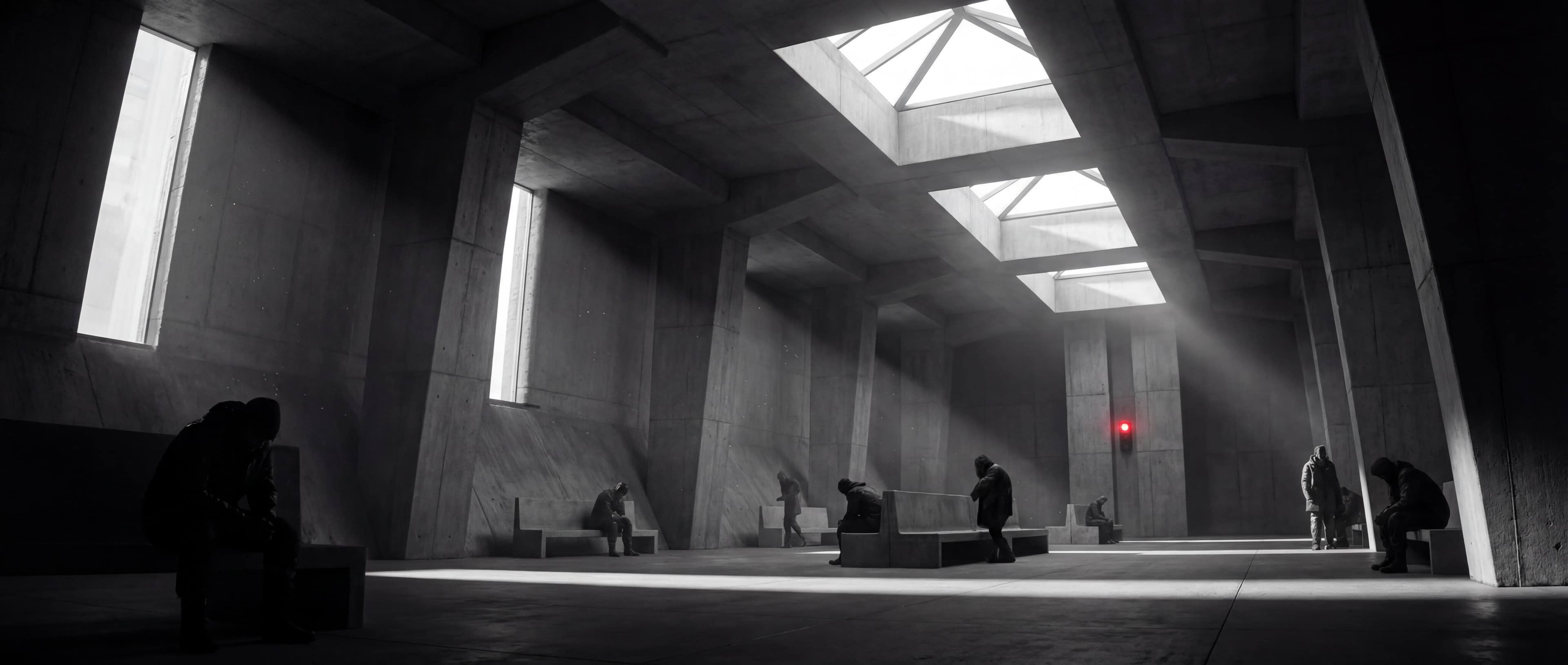
Some days sound like a long corridor. Not silence, not noise. A low hum and pauses, footsteps that never quite arrive. The feeling is not exactly fear and not exactly hope. It is waiting.
The waiting room is a psychic place. No walls, but you feel it. No clock, but it rules you. The ego sits stiff, staring at a door that won’t open, while the imagination gets bored. The body notices first: fatigue without cause, anxiety without an object, a mild irritation that doesn’t know where to land.
When life becomes a waiting room, the danger isn’t slowness. It’s automatism. We fill the time with screens, small tasks, conversations that don’t touch anything. The risk is that the person becomes identical with the mask used to avoid the void. The person speaks, answers, performs, but the inner life loses its voice.
Jung would say that in these moments the psyche is preparing a change. We can’t see it yet because it doesn’t have a shape. Waiting is a threshold without words, like waking up and not knowing who you are that day. The unconscious works in silence, as if the invisible is rearranging the furniture inside. It’s uncomfortable because the ego wants certainty, but there is no script that fits.
In the waiting room, old complexes activate. We become impatient with others or with ourselves, as if urgency were a form of control. Judgment appears: "I should be further along," "I’m doing something wrong." That voice isn’t truth; it’s the echo of a rigid persona that learned to survive on deadlines and results.
Here a small task appears: listen. Not to the "should," but to the body and the dream. What repeats in your days? What figure appears in your nights? What inner conversation has become unavoidable? The waiting room doesn’t ask for quick answers, it asks for honesty. The unconscious doesn’t open under force. It opens under respect.
I like to think of waiting as incubation. The egg doesn’t decide when to break. The fruit doesn’t ripen by willpower. The psyche doesn’t either. Something inside needs time, and the ego reads it as stagnation. If we can hold that tension without anesthetic, a different clarity appears: a quieter voice, but a truer one.
That doesn’t mean romanticizing passivity. The waiting room is not an excuse to avoid action. It’s a place where action changes tempo. Instead of pushing, touch. Instead of correcting, ask. Instead of imposing direction, check whether direction is already rising from below.
I’ve noticed that waiting seasons often carry a symbol: a door, a station, a corridor, a city under construction. They are images of transition. Not finished, not ruined. Structures that ask for patience and presence. Maybe that’s why the soul reaches for geometry and strong lines, something that can hold the chaos while the new is forming.
If you recognize yourself in this room, you aren’t failing. You’re in transit. The task is to stay awake without losing your pulse. Sometimes the exit doesn’t arrive as an explosion, but as a small gesture: a call, a frank conversation, a dream that repeats until you finally understand it.
The door always opens, but not when we pound on it. It opens when the ego stops being a guard and becomes a witness. Then the corridor stops being punishment and becomes a path.