Technical calm

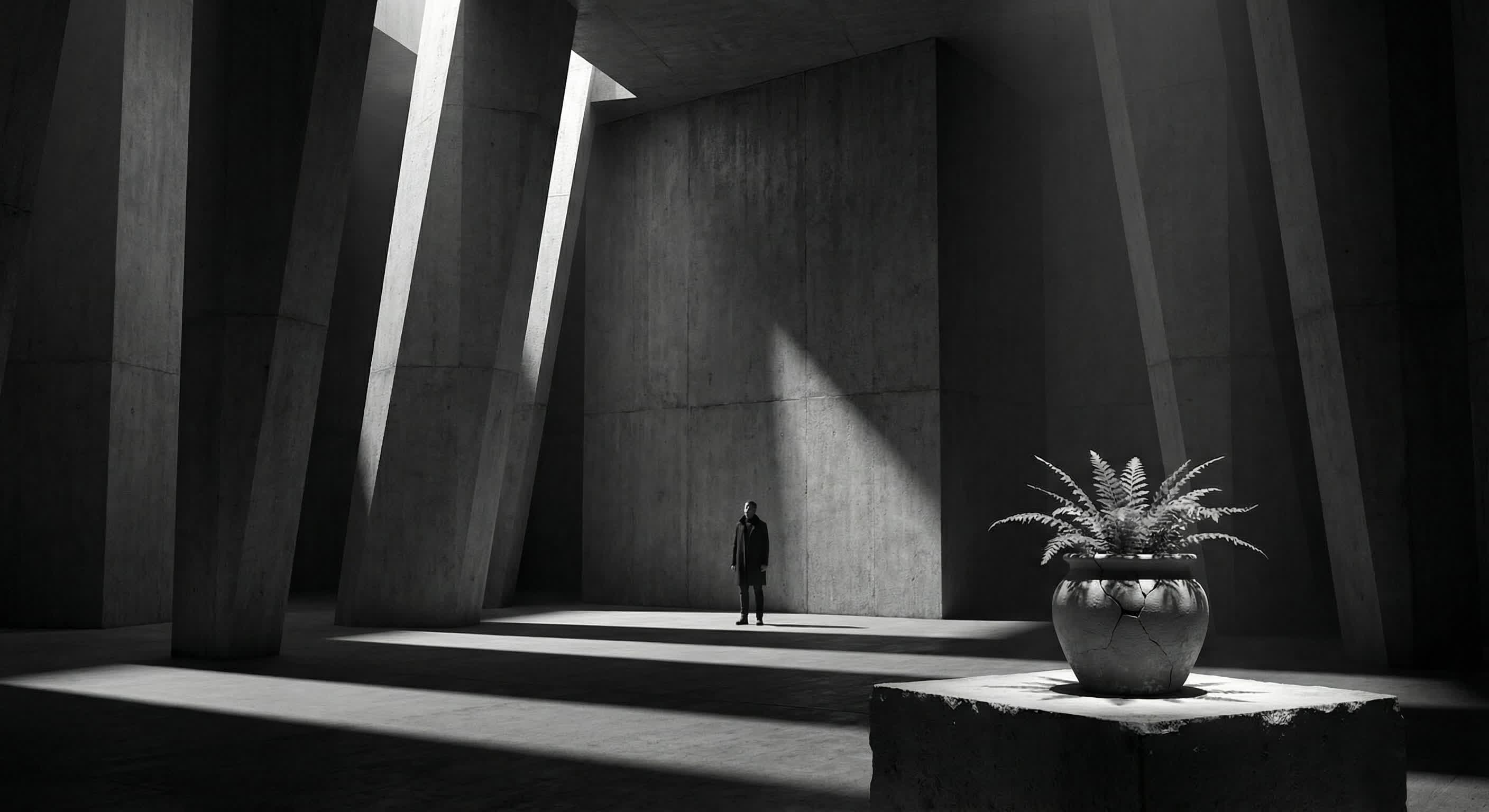
There is a kind of calm that is not rest, but containment. It is not the silence after good work, but the silence that appears when you grit your teeth. It is technical calm: the right gesture, the measured voice, the plan that works. Inside, something vibrates, but it does not move. Sometimes I confuse that with strength. Other times I know it is just control.
The era pushes us to live like this. Everything feels urgent and, at the same time, nothing actually breaks. We are asked for efficiency, thick skin, fast answers. The body learns to obey. The psyche does too. The persona, that necessary mask for social life, becomes armor. Useful, yes. Heavy, also. And what lives underneath starts breathing in a dark room.
I care about that room. It is the place of the shadow, but not only the rejected parts. It is also the place of the unlived life. That is where the anger that never spoke, the desire that stayed unclaimed, and the creativity that died at the customs gate of “being responsible” end up. Technical calm is a form of anesthesia. It makes no noise. It leaves no marks. But over time it leaves emptiness.
Jung said the unconscious compensates. When consciousness becomes one‑sided, the depths push back to balance it. That is why the more polished my performance, the more unpredictable what shows up later can be: the strange dream, the sudden irritation, the fatigue with no name. It is the psyche asking for a more honest deal.
I do not think this is only personal. It is an atmosphere. The world is full of protocols, dashboards, perfect calendars. There is beauty in that, but there is a cost. When everything is optimized, there is no space for the crack where life comes in. Technical calm kills error, and with error it kills surprise. And without surprise there is no soul.
The real work begins when you stop calling “calm” what is actually freezing. It can feel like betrayal. Lowering your guard is scary. The fear is fine. It is part of the bargain. The question is what we do with it. If we push it down, it returns as a symptom. If we listen, it opens paths.
A simple practice: sit for five minutes without music or a screen, and ask quietly, “What wants to move?” Do not look for a clever answer. Just listen to the first impulse. Sometimes it is a tremor in the chest. Sometimes it is a ridiculous image. That is the language of the unconscious. It does not enter through logic. It enters through sensation and image.
Another practice: write what you do not want to say out loud. Not to publish or analyze it. Just to let it exist. The page becomes a small temenos, a sacred space where truth can appear without consequences. When something that was locked away gets named, it loses destructive force and gains form. That is integration, or at least its beginning.
Technical calm is not the enemy. It serves. It protects. It has saved me more than once. But when it becomes the only posture, it turns into an elegant prison. The question I am asking today is simple: where am I being correct so I do not have to feel? What part of me is waiting for permission to breathe?
Maybe the next step is not a grand change. Maybe it is as small as admitting that the tension exists. Or letting the body tremble without correcting it. Or saying “I can’t handle this” without turning it into drama. The psyche does not ask for dramatics. It asks for truth.
If we listen to that truth with patience, calm changes. It stops being technical and becomes real. It is no longer the silence of clenched teeth, but the silence that comes when the soul and the body agree again.