The waiting room

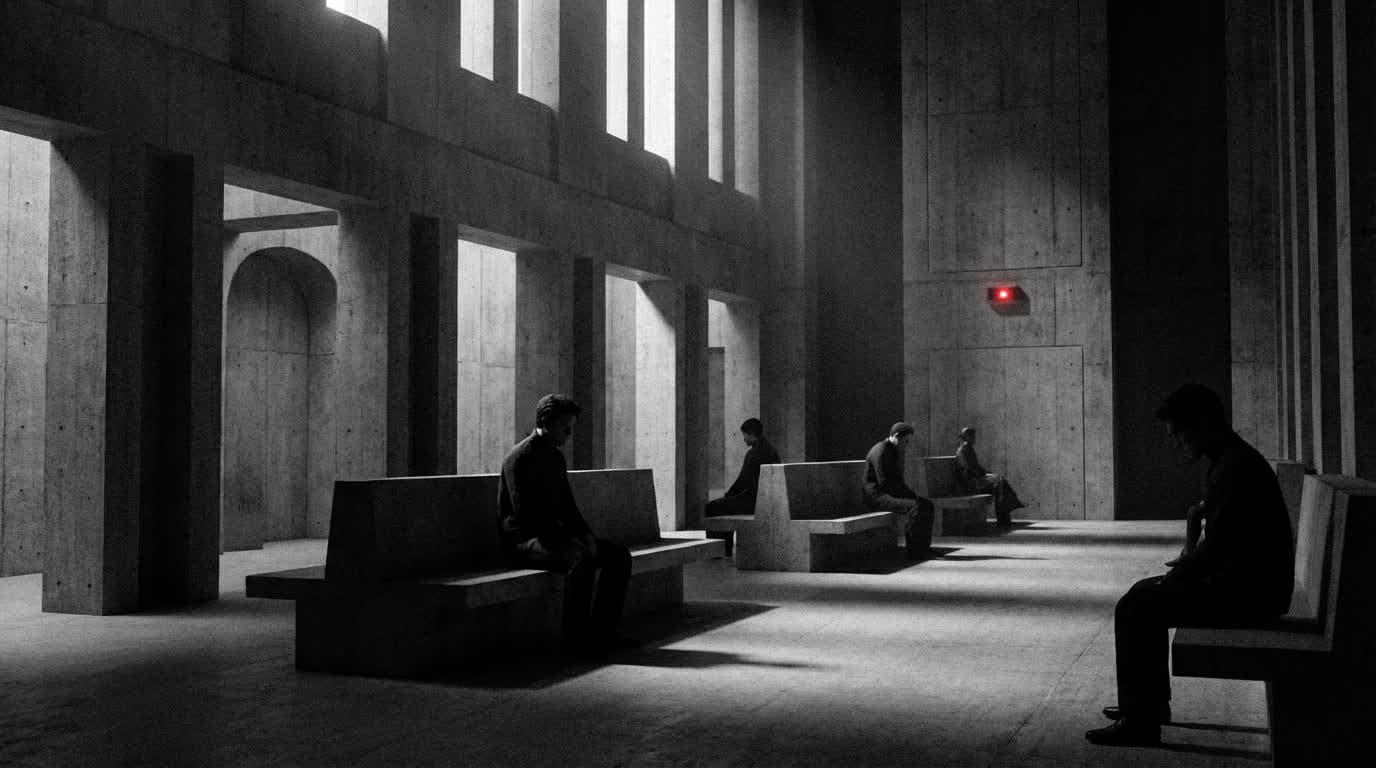
There are days when the city feels like a waiting room. No one knows exactly what they're waiting for, but everyone shares the same gesture: the body still, the eyes jumping from point to point, the pulse a little higher than usual. It's not apathy; it's a threshold. Something inside us is listening for a door that hasn't opened yet.
The persona gets tired when it becomes the only room. The social mask works, sure, but if we live there, the house loses its corridors. In fast times, the persona swells and the soul shrinks. The result looks like a full calendar and an absent heart. The waiting room shows up when the ego can no longer fake real movement.
Our impatience is often a shadow wearing modern clothes. It looks like energy, but sometimes it's fear. Fear of emptiness, of silence, of discovering that behind all the noise there isn't a quick solution. That fear pushes us to consume, to respond faster, to stack tasks as if external weight could cover an internal hole. The wait strips that illusion.
In Jungian terms, the waiting room is a temenos: a protected space where consciousness and the unconscious face each other without rushing a resolution. This isn't resignation. It's holding the tension of opposites. The ego wants action; the Self asks for pause. When those two forces touch, we feel anxiety, and also a strange clarity, as if the air had been cleaned.
Sometimes the anima or animus appears in these periods. Not always in epic dreams; sometimes in a conversation that knots the chest, in an image that won't leave, in a desire that arrives uninvited. They're inner messengers. They don't bring a plan, they bring a direction: "Something here is missing and it's yours."
I've noticed that on waiting days my body speaks before my mind. The shoulder tightens, the breath turns short, the stomach can't decide if it wants hunger or calm. That somatic language is a letter. Reading it is a form of respect. It's also a boundary against the tyranny of performance: not everything in me is available to the market.
A simple practice: sit for ten minutes without hunting for answers. Let an inner figure appear, even if it's vague. Ask what it fears, what it protects, what it doesn't want to lose. Active imagination isn't idle fantasy; it's a dialogue with what lives beneath the discourse. From there come decisions that aren't dramatic, but they are honest.
The waiting room has its gold. It gives back the right to slowness, to tenderness without utility, to a question that takes time to ripen. In a culture obsessed with immediate results, that is almost a subversive act. The collective shadow wants us to feel shame about the pause. The Self understands that the pause isn't absence; it's incubation.
I don't know when the door opens, and I don't think we can force it. But I do know that when it opens, we recognize the sound. We've been listening to it all along. Maybe that's what today is about: learning to wait without turning off life, to live the threshold like someone tending a seed underground, unhurried, trusting its own rhythm.